

The first genetically modified, non-browning apples will soon go on sale in the United States.
While genetic modifications in the past have been mainly defended as a way to protect crops, the Arctic Apple is one of the first GMOs marketed directly to consumers as more convenient. The controversial fruit could be a turning point in the nation’s highly polarizing debate over genetically modified organisms.
News
Synthetic biology startups funding surpasses $1B
February 24, 2017The decreasing cost of DNA sequencing and synthesis and the increasing reliability of genetic editing tools such as CRISPR has led to a growth in private funding to synthetic biology startups for the fourth straight year, surpassing $1B for the first time in 2016. With funds flowing to earlier stage startups, new companies raising early rounds represented 47% of all deals to synthetic biology in 2016.
Gene therapy for Fabry disease – A world first
February 24, 2017A Canadian team is the first in the world to use gene therapy to treat a patient with Fabry disease, a rare inherited enzyme deficiency. Using the patient’s own blood stem cells, researchers replaced the faulty gene and then transplanted the altered stem cells back into the patient.
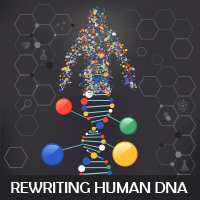
Scientists lay ground rules for rewriting human DNA
February 24, 2017In a report released by the U.S. National Academy of Sciences and National Academy of Medicine, an expert committee of scientists and bioethicists from 10 countries has laid out a set of principles to inform future manipulations of the human genome. Preaching caution, not prohibition, they recommend that regulators tightly control rather than entirely ban the option of making changes to human DNA to prevent genetic disease and disability.

Artificial Intelligence app launched to digitize health care triage
February 9, 2017Digital health firm HealthTap’s newest mobile app, Dr. A.I., digitizes the process of assessing the level of medical risk facing a patient and outlines the first step in the treatment pathway. The AI-powered “physician” software goes beyond conventional medical search engines by incorporating individual patients’ medical profiles such as age, weight and medical history, alongside expert knowledge gleaned from 105,000 triage physicians.

Fashionable synthetic biology: The North Face’s ‘Moon Parka’ spun from faux spider silk
February 9, 2017Using genetically modified bacteria to produce synthetic silk proteins, North Face’s special edition Moon Parka is both innovative and sustainable, created by the Japanese company Spiber using an entirely biological process requiring no fossil fuels or petroleum. These synthetic polymers, with the near-magical properties of spider silk, are tougher than Kevlar by weight but more elastic and responsive than fibers like cotton–a holy grail material for wearable protection.
Ontario research facilities for genomics and advanced computing receive $116 million in funding
February 9, 2017Canada’s Genomics Enterprise, The Centre for Phenogenomics, and Compute Canada MSI 2.0 were awarded over $116 million in funding by the Government of Canada as part of the Major Science Initiatives’ $328.5-million investment into 17 national research facilities across the country. With partnerships between SickKids, Mount Sinai Hospital’s Lunenfeld-Tanenbaum Research, UBC, Mcgill, and University Health Network (UHN)’s Princess Margaret Cancer Centre, these three projects will utilize the funds to make ground-breaking discoveries at the cutting edge of genomics research and technology.

Advances in precision medicine reflected in new colon cancer clinical practice guideline
February 9, 2017A new, evidenced-based clinical practice guideline on molecular biomarker testing for patients with colorectal cancer identifies opportunities for improving patient outcomes. This pivotal guideline will help establish standard molecular biomarker testing, guide targeted therapy decisions, and advance personalized care for patients with colorectal cancer.
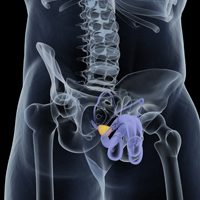
Cracking the genetic code for why inherited disease can turn lethal
February 9, 2017CDN and AUS prostate cancer researchers have discovered a key piece in the genetic puzzle of why men born with a BRCA2 mutation may develop aggressive localized cancers that resist treatment and become lethal for up to 50% of patients within five years. The findings show that the genes normally involved in regulating cell growth and division are abnormal in the BRCA2-associated cancers and resistant to therapy from the onset.

Scientists create first stable semi-synthetic organism
January 26, 2017The first living organisms to thrive with an expanded genetic code have been made by researchers at The Scripps Research Institute. Paving the way for synthetic biology, scientists added two synthetic base pairs to the DNA of E. coli microbes. They hope to program the base pairs so the organism produces new types of proteins to be made into drugs.