
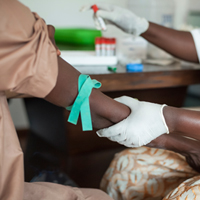
It took a public-health disaster for the Zimbabwean government to recognize the potential of precision public health. As a result of a common genetic variant, a switch to a new HIV treatment in 2015 proved toxic to 20% of the Zimbabwean population. Today, new investments promise to get precision public health off the ground.
News
The Genome Project Write: A Global Synthetic Biology Initiative
March 23, 2017What is the Genome Project-Write? Thirty-two years ago, the largest life science project ever conducted, the Human Genome Project (HGP), was proposed to “read” or sequence a human genome. Successfully completed in 2003, this project sparked a revolution in science that has changed the way we understand the human body and the world, and incited…
Teenager’s sickle cell reversed with world-first therapy
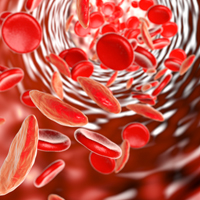
March 23, 2017A French teenager’s sickle cell disease has been reversed using a pioneering treatment to change his DNA. Doctors removed his bone marrow, and using gene therapy, re-engineered its DNA to create the right type of red blood cells. The corrected bone marrow was then put back into the patient. The teenager has been making normal blood since the procedure 15 months ago, with “no sign of the disease, no pain, no hospitalisation.”

The future of food production: Fermentation?
March 23, 2017“Companies want to go more natural, but they’re running into constraints … Fermentation offers a way to make ingredients without being reliant on a challenged supply chain.” To produce these ingredients, scientists identify and isolate the genes for the desired product and insert them into a host, such as yeast, which is fed sugars and nutrients to stimulate fermentation. The yeast and its genes are then filtered off, and the desired ingredient is purified out of the remaining broth. This economically feasible and environmentally friendly method is being used by companies such as Perfect Day, which is making cow’s milk without cows, and Impossible Foods, which is fermenting heme for its meaty-tasting yet plant-based products.
Precision medicine and population health share strategies, goals
March 23, 2017Population health management and precision medicine are more alike than different, and closer collaboration could produce impactful results. According to Jonathan Sheldon, Global VP of Healthcare at Oracle Health Sciences, “Precision medicine gives us the molecular tools to phenotype diseases, which you can then predict and manage at the population level. Genomics gives you that level of precision that is often lacking in risk stratification algorithms. They really enhance one another.”
Making science work for health
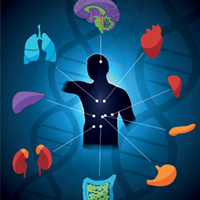
March 23, 2017A suite of introductory resources has been produced by the Genomics in Mainstream Medicine Working Group of the UK-based PHG Foundation. Each ‘factsheet’ is tailored to a specific medical specialty and seeks to raise awareness of genomic medicine and its impact on clinical care.
Advancing Microbiome Research in Ontario
March 10, 2017Scientific teams across Ontario are working to advance microbiome research in Canada’s health, agriculture, bioproducts and water sectors. Ontario Genomics is proud to provide support to the following cutting edge projects.

Bill banning genetic discrimination passes
March 10, 2017A bill that protects Canadians from discrimination based on genetic information was passed in parliament yesterday by a vote of 222-60. Bill S-201, which was already passed in the Senate, bars health and life insurance companies from requiring a person to undergo genetic testing or to disclose the results of previous tests. The legislation also prohibits anyone from sharing genetic testing results without written consent, with exceptions for physicians and researchers. Prior to Bill S-201, Canada was the only G7 country without specific protections against genetic discrimination.

“Cracking Cancer”: Personalized oncogenomics on The Nature of Things
March 10, 2017CBC documentary series “The Nature of Things” featured an in-depth look at the BC Cancer Agency’s Personalized Onco-Genomics (POG) program in the documentary “Cracking Cancer.” With the aim of identifying and treating cancer-causing mutations specific to each patient, these cutting-edge clinical trials hold the promise of personalized cancer care.
The invisible clean-up crew: Engineering microbial cultures to destroy pollutants
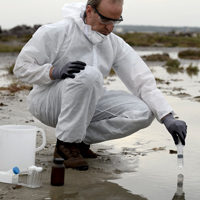
February 24, 2017These are exciting times in fundamental and applied environmental microbiology for Elizabeth Edwards. Leveraging genomics, microbiology and engineering, the University of Toronto professor has developed a highly successful biotechnology approach to inexpensively, effectively and safely clean up industrial solvents in soil and groundwater. According to Edwards, whose technique has already been used to restore more than 500 sites around the world, we’ve only just begun exploring “the enormous, untapped potential of anaerobic microbes.”