

The Canadian government intends to challenge the constitutionality of Bill S-201, The Act to Prohibit and Prevent Genetic Discrimination. The law, which was recently passed by Parliament and took effect May 4, adds genetic information to the list of protected data under the Privacy Act and the Personal Information Protection and Electronic Documents Act. It also amends the Canadian Human Rights Act to add genetic characteristics as a prohibited basis for employment, housing and provision of goods or services discrimination.
Personalized Medicine

Ontario invests to improve the health of mothers and babies
May 19, 2017Ontario is investing more than $12 million to support new and existing programs that will improve maternal and child health in Ontario. Announced May 12th, the investment includes enhanced screening of all newborns with the addition of a new screen for hearing loss, enabling families to receive treatment or language and early literacy support sooner. The province also recently added a new screen for critical congenital heart disease, to detect a range of heart defects in newborns that could cause life-threatening symptoms.

23andMe cleared to sell direct to consumers
May 4, 2017The U.S. FDA has announced that it will now allow 23andMe to market its Personal Genome Service Genetic Health Risk tests straight to consumers. The new decision is expected to open the floodgates for more direct-to-consumer tests for disease risks, paving the way for other companies to enter the market.

Genes key to whether hormone therapy lowers broken bone risk in older women
May 4, 2017Women at the highest genetic risk for fracture benefit the most from hormone therapy. The first to investigate gene-hormone therapy interaction on fracture in postmenopausal white women, this study looked at a subset of 9,922 women from the more than 27,000 participants in hormone therapy clinical trials. “This is where precision or personalized medicine comes in — the attempt to get the right drugs to the right person to ensure the most benefit and least harm.”
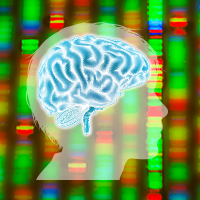
26 novel genes linked to intellectual disability
April 20, 2017Researchers at the Centre for Addiction and Mental Health and Queen’s University have identified 26 new genes linked to intellectual disability. This study, the largest of its kind in North America, has implications for the diagnosis and clinical care of those affected by intellectual disability, with potential to eventually lead to personalized treatments for affected individuals.

What precision medicine can learn from the NFL
April 20, 2017In the NFL, rival franchises compete bitterly on the field every Sunday, yet have developed a structure that enables the entire enterprise to flourish and profit. In contrast, misplaced competition in cancer research and siloed clinical and genetic data, impedes cancer care advancement. What if a philosophy similar to the NFL could be brought to precision medicine, encouraging data sharing so that drug development and discovery are accelerated, while still allowing for competition and profit?
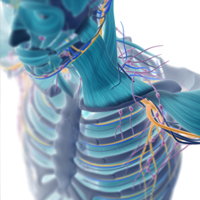
3D humans could revolutionize precision medicine
April 6, 2017A cross-disciplinary team is building a complete morphological and physiological virtual human, mapping all anatomical parts and their possible variations. The Parametric Human project will create a central repository and platform where researchers can share data, and ultimately develop targeted therapies, map complex surgeries and create simulation-based training for health care professionals.
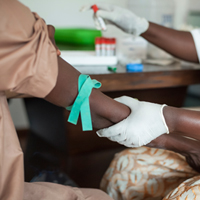
How the genomics revolution could finally help Africa
April 6, 2017It took a public-health disaster for the Zimbabwean government to recognize the potential of precision public health. As a result of a common genetic variant, a switch to a new HIV treatment in 2015 proved toxic to 20% of the Zimbabwean population. Today, new investments promise to get precision public health off the ground.

Precision medicine and population health share strategies, goals
March 23, 2017Population health management and precision medicine are more alike than different, and closer collaboration could produce impactful results. According to Jonathan Sheldon, Global VP of Healthcare at Oracle Health Sciences, “Precision medicine gives us the molecular tools to phenotype diseases, which you can then predict and manage at the population level. Genomics gives you that level of precision that is often lacking in risk stratification algorithms. They really enhance one another.”
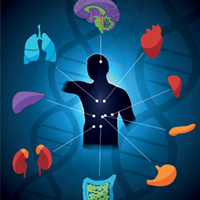
Making science work for health
March 23, 2017A suite of introductory resources has been produced by the Genomics in Mainstream Medicine Working Group of the UK-based PHG Foundation. Each ‘factsheet’ is tailored to a specific medical specialty and seeks to raise awareness of genomic medicine and its impact on clinical care.