

LifeLabs has partnered with GenXys Health Care Systems to offer a personalized medicine testing service. Using cheek swabs to collect patients’ DNA, samples are submitted to LifeLabs where they are analyzed for 60 genetic variations that affect how a patient metabolizes and responds to medications. This will ultimately help physicians prescribe medications based on each patient’s specific medical and genetic profile.
News & Events

CDN study reveals disconnect between cancer drug cost, benefit
June 15, 2017A new study has revealed the pricing of cancer drugs is unrelated to effectiveness. Using frameworks developed by the American Society of Clinical Oncology and the European Society of Medical Oncology, Dr. Christopher Booth at Queen’s University studied all randomized controlled trials of new cancer drugs in non-small cell lung, breast, colorectal and pancreatic cancer over a four-year period. The authors concluded that to deliver optimal cancer care in a sustainable health system, the disconnect between drug cost and clinical benefit must be reconciled.

FDA clears Keytruda based on cancer genetics, not disease origin
June 1, 2017Last week, Merck & Co’s Keytruda became the first cancer drug ever approved by the FDA based on patients’ specific genetic traits, regardless of where in the body the disease originated. The approval, though restricted to advanced patients who have failed other therapies, marks a major advancement for precision medicine, where genetic biomarkers may determine the course of therapy rather than the origin of the cancer in the body. The hope is that one day advanced genetic information will be able to identify and select the best treatments for cancer patients.

When the patient is a gold mine: The trouble with rare-disease drugs
June 1, 2017Alexion is a powerhouse in the market for orphan drugs, a fast-growing pocket of the pharmaceutical industry that focuses on rare diseases. Some orphan drugs, such as Alexion’s Soliris, are highly effective, but they have caused a seismic shift in both treatment costs and sales practices. Many orphan drugs cost more than most new homes and, in some parts of the world, must be delivered by armed guards. With global sales expected to almost double by 2022 to $209 billion, this article examines the ethical and medical boundaries of rare-disease drugs.

Applying genomic selection to improve health, welfare, efficiency and production traits in turkeys
May 31, 2017Dr. Christine Baes of UofG and Ben Wood of Hybrid Turkeys will be collaborating to adapt and apply genomic tools to improve the health, welfare and productivity of Canadian turkeys. Hybrid Turkeys’ parent company, Hendrix Genetics, has already implemented genomic selection in chickens and pigs, and will now adapt and apply the technology to achieve improvements in feed efficiency, bodyweight, yield, egg production and livability in commercial turkeys. This will lead to estimated economic gains of $39 million over the next five years for the Canadian turkey industry, and will result in environmental benefits due to improved feed efficiency as well as reduced manure and greenhouse gas production.

Increasing yield in canola using genomic solutions
May 31, 2017Dr. Peter Pauls, Michael Emes, and Ian Tetlow of the UofG are working with Benson Hill Biosystems and its Canadian subsidiary, CanolaCo to produce more efficient varieties of canola for Canadian producers. Using a portfolio of trait candidates to improve photosynthesis-one of the most complex systems in plants-and developing these in canola, the project will enhance crop productivity by increasing photosynthetic capacity without negatively impacting seed quality. This will enable commercialization of the improved plants, with the enhanced yields of the canola crop enabling the industry to meet its goal of increasing yield by 53 percent in the next 10 years, growing industry revenues by an estimated $3-$4 billion per year.

Translating ’OMICS for competitive dairy products
May 31, 2017Dr. Gisele LaPointe of UofG is working with Maria Pepe of Parmalat Canada, the number one producer of premium aged cheddar in Canada, to increase Parmalat’s manufacturing capacity, and thereby gain efficiency and protect market share. To achieve this, the team will validate and implement metagenomic, metaproteomic and metabolomics tools modified to meet the technical requirements of cheese production. By improving manufacturing processes and controls, the project will overcome current bottlenecks and significantly increase the production capacity of high-quality, competitive, aged cheddar cheese –ultimately increasing the demand for and utilization of Canadian milk.
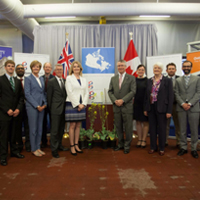
U of G genomics research projects land $10.7M in funding
May 29, 2017More than $10 million in funding for three genomics research projects at the University of Guelph was announced Friday.
Much of the money comes from a federal organization called Genome Canada, with the provincial government and private sector also contributing.
More than $6 million is going toward one project carried out in conjunction with Kitchener-based Hybrid Turkeys. Guelph animal biosciences professor Christine Baes will take technology she developed for other animals and adapt it to turkeys, searching for ways to improve turkey health and productivity through genetics.
About $3.4 million is going to a plant science professor who is looking at finding ways to improve the productivity of canola crops, while a food scientist will work with Parmalat Canada and $1.4 million to find ways to increase production of aged cheddar cheese.
The Guelph projects are three of five in Canada to receive funding this year through Genome Canada’s Genomic Applications Partnership Program.

Ontario Genomics appoints new President and CEO
May 24, 2017PRESS RELEASE – TORONTO, May 24, 2017 – Bettina Hamelin has been appointed President and Chief Executive Officer (CEO) of Ontario Genomics (OG), a not-for-profit organization dedicated to catalyzing and advancing genomics innovation within Ontario. Dr. Hamelin will join OG’s board and will assume the CEO role effective August 01, 2017. With over 25 years…

Synthego first to offer over 100,000 genomes in powerful new CRISPR software
May 19, 2017Synthego has announced a ready-made toolkit to make CRISPR more accessible to all researchers. Touting a selection of 100,000 genomes belonging to 9,000 species, the platform addresses gaps in the current CRISPR design process, and enables new and experienced researchers to create fast and easy guide designs for gene knockout. The company hopes that this vastly simplified interface, and the ability to easily share your design and compare it with existing work, will increase the number of experiments and work being performed in the synthetic biology space.