

Lincoln Stein’s of OICR is setting up a unique cloud computing facility which will enable research on the world’s largest and most comprehensive cancer genome dataset. Rather than requiring researchers to spend weeks downloading hundreds of terabytes of data from a central repository before computations can begin, researchers will upload their analytic software into the Collaboratory cloud, run complex data mining and analysis operations across cancer genome sequences and their associated donor clinical information, and download the compiled results in a secure fashion.
Impact stories
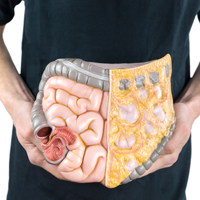
Improving detection and treatment of IBD
September 22, 2012Inflammatory bowel diseases (IBD), such as Crohn’s disease and ulcerative colitis, are incurable debilitating lifelong diseases that can affect children. Early detection is critical to avoiding complications and improving their quality of life. At the moment, however, there is no single test to determine the presence or type of IBD and the tests that exist are very uncomfortable for children. Drs. Alain Stintzi, David Mack and team are using $2.9 million from the LSARP competition developing a simple, non-invasive approach to detecting IBD that will also be more cost effective. Using cutting-edge technology, the scientists will examine intestinal bacteria to develop better ways of identifying IBD and determining its severity. This work could also lead to new treatment, enhancing the quality of life for children everywhere
The Canadian Pediatric Cancer Genome Consortium
July 1, 2010Cancer is the most common cause of non-accidental death in children from infancy to young adulthood. A group of Canadian researchers and clinicians have joined forces to use one of the most powerful gene sequencing technologies ever developed, to probe the genomes of four of the most challenging childhood cancers known. The ultimate aim of this project is to use the newly discovered genetic information about these cancers to gain insight into targets and new therapies that may be developed. This project also provides the opportunity to study the ethical issues that arise in deciding when and how best to provide the results from genetic studies on childhood cancers back to the patients and their families. This multi-disciplinary, cross-Canada national study will redefine the genetic basis of aggressive childhood cancers, and the results will lead to improved survival and reduced long-term consequences for children with cancer.
Finding of Rare Disease Genes in Canada (FORGE Canada)
July 1, 2010Genetic disorders of children are individually rare but collectively frequent, causing medical problems including birth defects, intellectual disability, and organ failure. Most genes that cause these conditions have not yet been found, mainly because gene-discovery studies are difficult to perform when DNA from only a small number of affected children is available. Recently a new technology (called Next Generation Sequencing) has been developed which allows a person’s entire genetic code to be analyzed within a few days at reasonable cost. Through this national collaboration between Canadian doctors and scientists, many genes responsible for genetic disorders that affect children will be able to be rapidly identified.
The contribution of genetic modulators of disease severity in Cystic Fibrosis to other diseases with similarities of clinical phenotype
July 1, 2004Drs. Peter Durie and Julian Zielenski at the Hospital for Sick Children’s Research Institute plan to investigate the genetics of other diseases with phenotypes similar to Cystic Fibrosis. Their project will apply knowledge about the genetic factors that influence the severity of CF to other diseases that are clinically similar. These diseases include a single ¬gene disorder affecting the liver (a1¬antitrypsin deficiency), and multifactorial conditions such as pancreatitis due to alcohol abuse and chronic obstructive pulmonary disease due to smoking. This project’s results are expected to lend itself to the development of genetic tests of disease susceptibility that will be useful in future research projects and in development of preventative strategies to modify behaviour in high risk populations.
The dynactome: Mapping spatio-temporal dynamic systems in humans
July 1, 2004Proteins are large molecules responsible for the structure, function and regulation of cells. Proteins interact with one another, and assemble pathways and networks within cells, which account for sophisticated cellular behaviour. Tony Pawson and Jeff Wrana at Mount Sinai Hospital, along with University of Western Ontario’s Shawn Li will map protein interactions within human cells in order to determine whether diseases such as malignant cancers result not only from specific changes to individual genes and proteins, but also from changes in the entire cellular network. Drawing on international collaboration in the United States and China, this project represents the first large¬scale effort to map dynamic interactions. It is expected to lead to new proteomic and computational technologies as well as innovative cancer therapies.
Structural and functional annotation of the human genome for disease study
July 1, 2004Robert Hegele at the Robarts Research Institute and Steve Scherer at SickKids are leading an innovative project which aims to bridge new biological knowledge with medical applications. The project will deliver a “new improved edition” of the human genome map; one that annotates and characterizes large¬scale copy number variants, alternative splicing profiles of genes in selected tissues and previously unknown genes and other functional elements. Hegele and collaborators will apply the annotated genome map with its rich trove of new biological information to unravel the genetic basis of diseases that extract a huge social and economic toll in Canada, such as diabetes, heart disease and breast cancer. The data generated from the project will be made available, free of charge, on the Internet, in order to accelerate biomedical discovery, including the diagnosis and treatment of common diseases.
Quantum dot diagnostics: Simultaneous Genomic and proteomic profiling of multiple pathogens at point-of-care
July 1, 2004Canada is developing cutting-edge expertise in the rapid and accurate diagnosis of infectious diseases, based on nanotechnology. Kevin C. Kain of the McLaughlin¬ Rotman Center for Global Health and Michael Greenberg, FIO Corp have assembled a research team to create a high¬ throughput diagnostic system capable of detecting multiple global infectious diseases within minutes. The system is based on quantum dots ¬ tiny fluorescent probes that can be used as biomarkers to tag organic molecules and track them during biological processes. This system will ideally be used at point of care to detect or exclude the presence of pathogens related to five major infectious diseases ¬ SARS, HIV/AIDS, malaria, hepatitis B and hepatitis C.
Integrative Biology
July 1, 2004The genomes of more than two hundred organisms have been sequenced, from microscopic earthworms to humans. The function of thousands of individual genes is attracting the attention of scientists. But integrative biology is revealing that genes work not individually but as physical or functional assemblies to perform their functions. Brenda Andrews at the University of Toronto is leading a project to develop an integrated view of Saccharomyces cerevisiae (baker’s yeast) – a leading model organism. The project is expected to yield valuable intellectual property, including new instrumentation, reagents (substances used in chemical analysis or synthesis), methodologies for human and veterinary therapeutics, and reagents for industrial processes and for basic and applied research
Identification of genetic pathways that regulate the survival and development of cancer and cancer stem cells
July 1, 2004Breast cancer, leukemia and brain tumours are among the most common and lethal tumors that affect Canadians. Cynthia Guidos of SickKids is studying study human tumors and mouse cancer models in order to address two crucial issues: what genetic alterations distinguish very aggressive from more benign tumors, and what genetic and biological malfunctions lead to the development of cancer stem cells. By dissecting the cellular signals that govern abnormal survival of tumor cells and cancer stem cells, the project is expected to develop new “biomarkers” that may help to reserve the most aggressive cancer treatments for patients with the highest risk of failing conventional therapies.